Why Employee Onboarding Fails — and How AI Fixes It
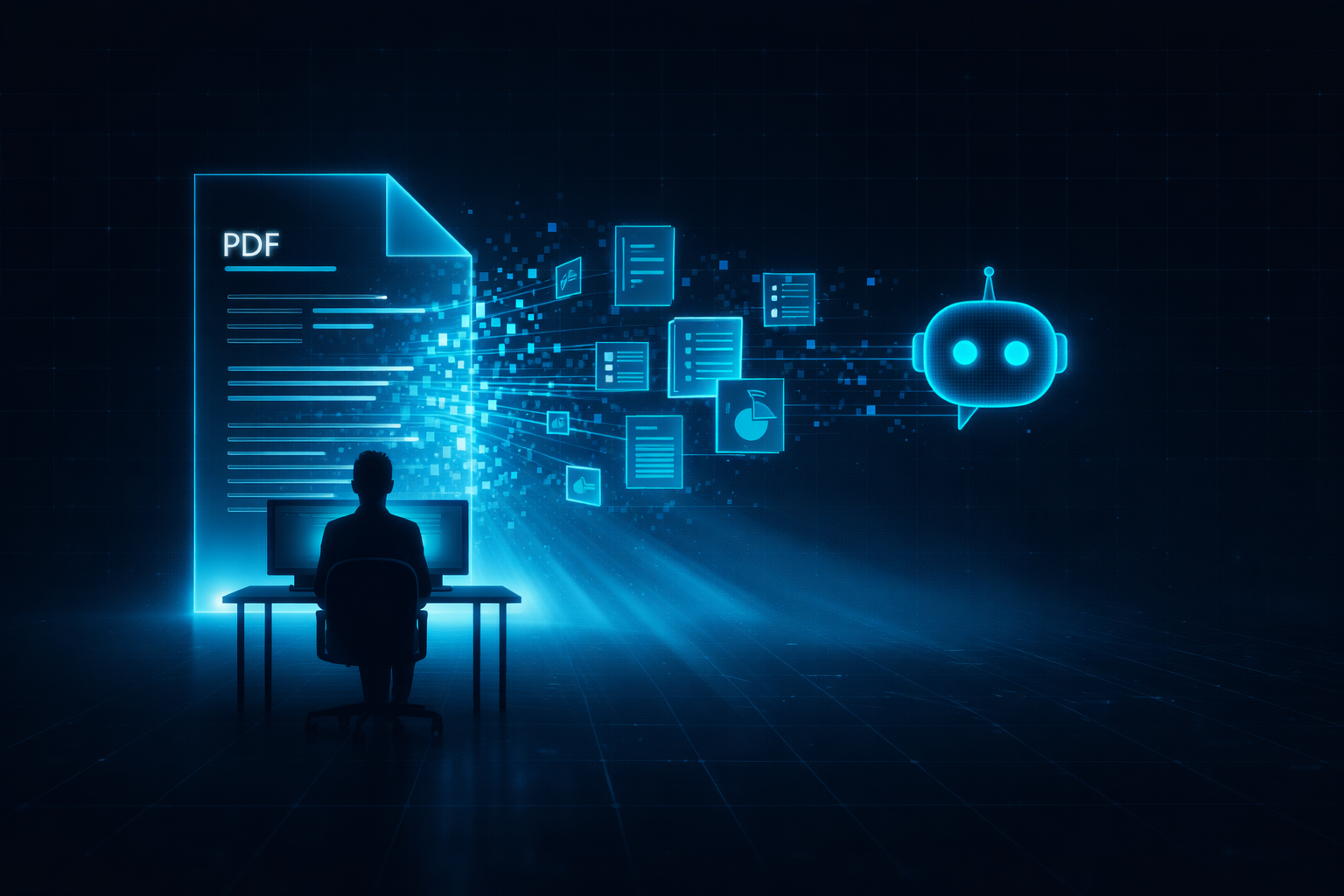
TL;DRMost employee onboarding programs fail because they dump static documents on new hires, hold a few kickoff meetings, then stop. Research shows people forget 70% of new information within a week without reinforcement. AI-assisted onboarding fixes this with short modules, spaced-repetition quizzes, and a chatbot that answers questions in the flow of work.
Here's a familiar story. You hire someone great. Week one is a whirlwind of Zoom calls, a shared Drive link, and a "let me know if you have questions" from their manager. Week two, they're quiet. Week four, they make a mistake that was clearly covered in the 47-page onboarding PDF nobody remembers reading. By month three, you're wondering if the hire was a miss.
It usually wasn't. The hire was fine. The onboarding system was broken.
The PDF method is dead
For the last twenty years, "employee onboarding" in most small businesses has meant: give the new hire a document, schedule a meeting, hope for the best. This was already shaky in 2010. In 2026 it's malpractice.
Three things changed:
- Workflows got more complex. The average operational role now touches 6–10 software tools, up from 2–3 a decade ago.
- Remote and hybrid work removed osmosis. New hires used to learn by overhearing. Now they sit alone on Slack.
- Attention spans shrank. Nobody — not you, not them — is going to read a 40-page policy doc in one sitting and retain it.
What the research actually says
The forgetting curve, first mapped by psychologist Hermann Ebbinghaus in 1885 and replicated dozens of times since, shows that without reinforcement, people forget roughly 50% of new information within an hour and 70% within a week. The only reliable counter is spaced repetition — revisiting the material at growing intervals.
Static onboarding documents do the opposite. They front-load everything into week one and then vanish.
The three things AI-assisted onboarding does differently
1. It chunks content into short, outcome-based modules
Instead of one giant "New Hire Handbook," the new employee gets 15–25 five-minute modules, each tied to a specific thing they need to do on the job. Short modules fit into real workdays. Long documents don't.
2. It tests for application, not recall
Quizzes aren't trivia. They're short scenarios: "A customer emails saying their order is late — what are your next two steps?" This is the kind of question that surfaces real knowledge gaps, and AI can generate these directly from your SOPs in seconds.
3. It gives the new hire a chatbot that already knows your business
This is the single biggest shift. When a new hire has a question at 9:47pm on a Tuesday, they don't have to Slack their manager or dig through Drive. They ask the chatbot, which answers using your company's actual procedures and cites the source. Confidence goes up. Embarrassment goes down. Repeat questions disappear from your senior team's inbox.
The metric that matters: time to independence
Forget "time to productivity" — it's too vague. Track time to independence: the number of days until a new hire can complete their core workflow without asking a teammate for help. In our experience, replacing document-based onboarding with an AI training system cuts this number roughly in half.
For a role that previously took 8 weeks to ramp, that's a month of recovered manager time per hire. Across even a small team, it adds up fast.
Frequently asked questions
Why do most employee onboarding programs fail?
They rely on static documents and one-time meetings. Without reinforcement, new hires forget roughly 70% of what they learned within a week.
How does AI improve employee onboarding?
It delivers training in short modules, reinforces memory with quizzes, and provides a chatbot that answers questions instantly using the company's own SOPs — so learning happens in the flow of work.
How long should onboarding take?
For most operational roles, 2 to 6 weeks of structured learning with ongoing reference access for at least 90 days. Compressing it into a single week almost always creates knowledge gaps that show up as month-two mistakes.
Related reading: How to Turn Your SOPs Into an AI Training System.
Fix your onboarding once, not every quarter
QuarterSmart builds the training system, the quizzes, and the chatbot so your new hires ramp in half the time.
Book a Free Training Audit →