AI Chatbots for Employee Training: What Actually Works in 2026
TL;DRA good training chatbot is not ChatGPT with a logo slapped on it. It's a retrieval-augmented assistant trained on your company's actual SOPs, grounded in cited sources, instrumented with analytics, and deployed where your team already works. Done right, it cuts repeat Slack questions by 60% or more within the first 30 days.
Every week we talk to a founder who says: "We already tried an AI chatbot. It didn't work." When we ask what they tried, the answer is almost always the same — they pointed ChatGPT at their Google Drive, it hallucinated an answer, someone acted on it, and the experiment ended.
That's not a failure of AI chatbots. That's a failure of how the chatbot was built. Here's what separates a novelty bot from one that actually moves the needle on operational training.
The four characteristics of a training chatbot that works
1. It's grounded in your SOPs, not the internet
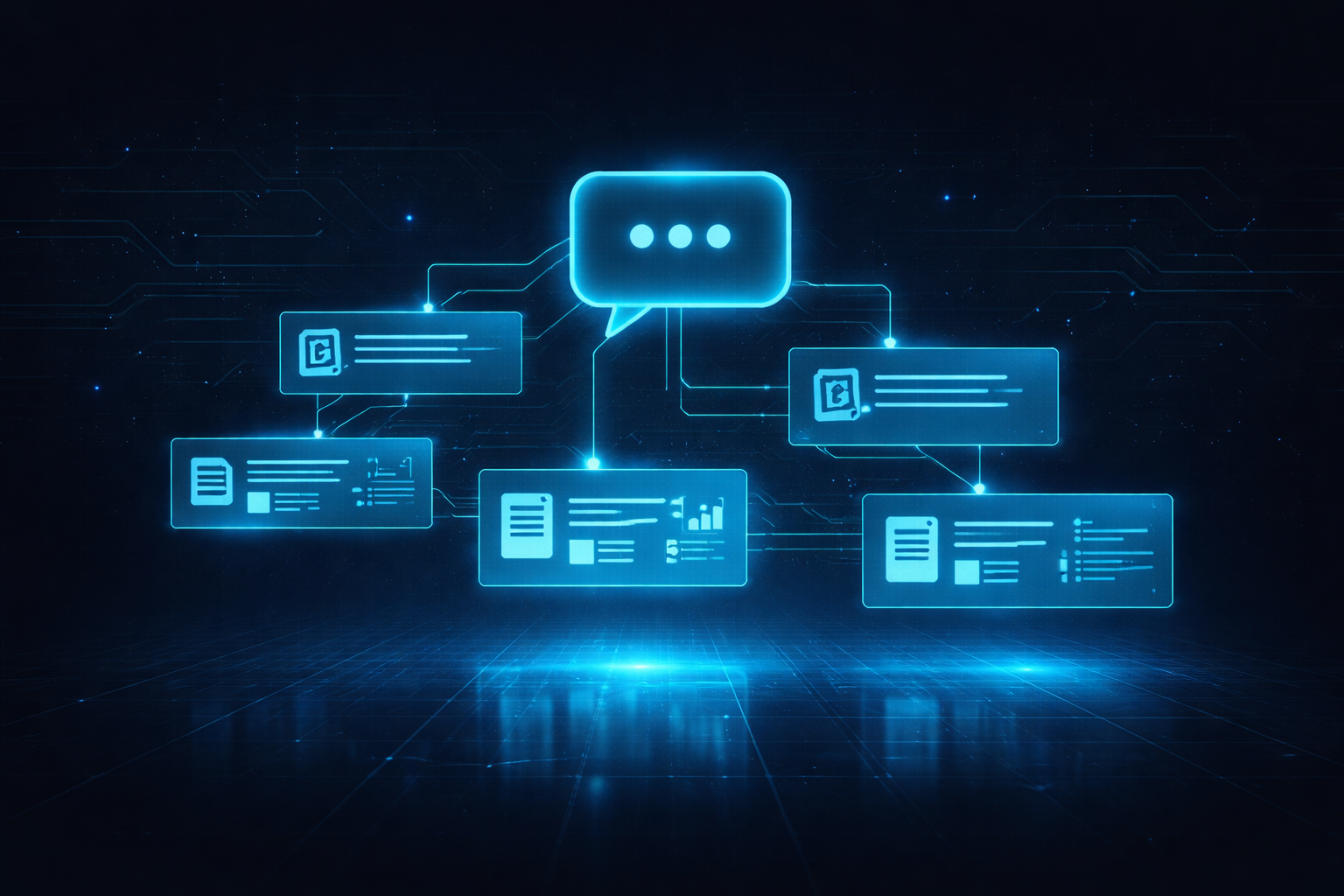
A training chatbot should use retrieval-augmented generation (RAG). In plain English: before the AI writes an answer, it searches your documentation for the most relevant passages and writes an answer based on those specific passages. If no relevant passage exists, the bot says so. It does not guess.
This single architectural choice eliminates roughly 95% of the hallucinations people worry about.
2. It cites its sources
Every answer should link back to the SOP it came from. Citations do three things at once: they let the employee verify the answer, they build trust in the bot over time, and they turn every conversation into a discoverability tool for documentation the team didn't know existed.
3. It lives where your team already works
A chatbot on a standalone web page gets used for a week and then forgotten. The same bot embedded in Slack, Microsoft Teams, or a sidebar in your training dashboard gets used every day. Distribution beats sophistication.
4. It reports its own blind spots
The most underrated feature: the bot should log every question it couldn't confidently answer. Those logs are gold. They tell you exactly which SOPs are missing, which are outdated, and which topics need clearer documentation. A training chatbot that surfaces its own blind spots turns into a self-improving knowledge system.
Novelty bot vs training bot, side by side
| Trait | Novelty chatbot | Training chatbot |
|---|---|---|
| Source of answers | Public internet | Your SOPs |
| Hallucination rate | High | Low (cited passages) |
| Citations | None | Linked to source doc |
| Deployment | Separate web app | Slack / Teams / dashboard |
| Analytics | None | Logs gaps + usage |
| Business outcome | Curiosity | Fewer repeat questions, faster ramp |
What you should measure
If you're going to invest in a training chatbot, instrument it from day one. The four metrics that matter:
- Daily active usage — is the team actually reaching for it?
- Confidence rate — what percentage of queries the bot answered with high confidence
- Unanswered queries — the SOP gaps list, reviewed weekly
- Deflection rate — fewer of the same question landing in your senior team's inbox
A well-built training chatbot typically sees deflection rates of 60–80% within the first month, meaning senior teammates stop getting pinged for the same answer over and over.
The implementation mistakes to avoid
- Feeding in messy docs. Clean the SOPs first. A chatbot trained on contradictory documentation will confidently contradict itself.
- Skipping the human review layer. For the first 2–3 weeks, have a human spot-check 10% of answers. You'll catch systemic issues before they spread.
- Treating it as set-and-forget. SOPs change. A chatbot that hasn't been re-indexed in six months is a liability. Automate the re-index on a weekly or bi-weekly cadence.
- Not defining the scope. A chatbot that tries to answer everything is a chatbot that answers nothing well. Narrow scope is a feature.
Frequently asked questions
What is an AI training chatbot?
A custom assistant trained on your company's own SOPs that answers employee questions with cited sources from your internal documentation, instead of generic internet knowledge.
How is it different from ChatGPT?
ChatGPT answers from general internet data. A training chatbot uses retrieval-augmented generation to pull answers from your SOPs and cites the source doc so employees can verify the answer.
How much does it cost?
For a small to mid-sized team, a custom training chatbot typically costs a one-time build fee plus a small monthly hosting and model-usage cost — usually less than the time cost of one repeated Slack question per week from a senior teammate.
Related reading: How to Turn Your SOPs Into an AI Training System · Why Employee Onboarding Fails.
Get a chatbot trained on your actual business
QuarterSmart builds, hosts, and maintains custom training chatbots grounded in your SOPs — with citations, analytics, and Slack/Teams deployment included.
Book a Free Training Audit →